

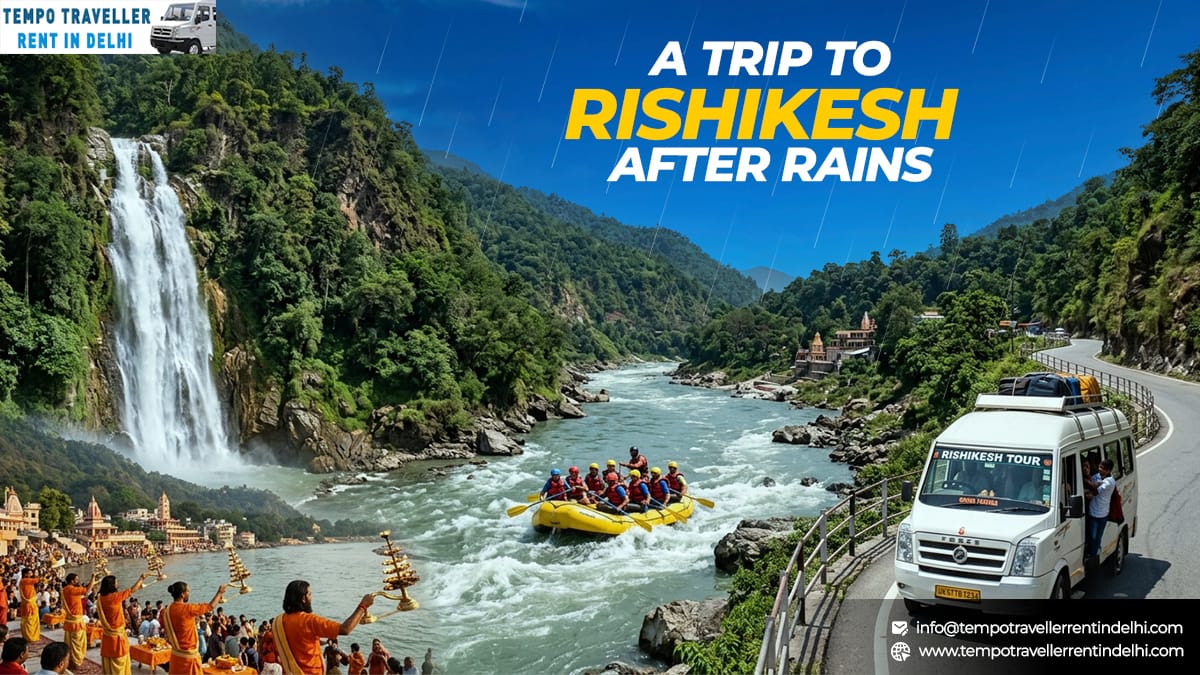
Rishikesh is at its best right after the monsoon, from mid-September onward, when the Ganga runs clean and green again, the surrounding waterfalls (Neer Garh, Patna, and Kunjapuri viewpoints) are at full flow, the Ganga Aarti at Triveni Ghat and Parmarth Niketan turns magical against a lush, rain-washed hillside, and white-water rafting reopens for the season once river levels stabilise. If you are planning a trip to Rishikesh after the rains, the last two weeks of September through November is the sweet spot-fewer crowds than the October-November peak, cooler air, and a river that’s finally safe and legal to raft again.
Why Rishikesh Changes Completely After the Rains?
Most travellers think of Rishikesh as a year-round yoga-and-adventure town, but the town genuinely transforms between July and September. During peak monsoon (July–August), the Ganga swells with silt and debris, rafting is officially suspended by the Uttarakhand government for safety, and several forest trails to waterfalls are closed due to landslide risk. Once the rains taper off in mid-September, everything reopens at once-rivers, trails, and temple ghats-making the following two months arguably the best window of the entire year to visit.
The hills around Rishikesh turn a deep green that photographs beautifully, the air is washed clean of dust and haze, and daytime temperatures settle into a comfortable 22–28°C, ideal for both sightseeing and outdoor activity.
Rafting Season Reopening: What You Will Get?
Uttarakhand’s tourism and disaster management authorities halt commercial rafting on the Ganga from around mid-June through mid-September, depending on river discharge levels that year. Rafting operators resume trips once the Irrigation Department confirms safe flow rates, which falls between the third week of September and the first week of October.
If you’re booking a September trip, keep two things in mind:
- Call ahead or check with your travel operator closer to the date, since the exact reopening date shifts by a week or two depending on how long the monsoon lingers.
- Early-season rapids run stronger than in October–November, since the river is still carrying extra volume. This makes late September rafting more thrilling but also means operators are stricter about life jackets, swimming ability, and which stretches (16 km vs. 26 km) are permitted.
Popular rafting stretches include Shivpuri to Rishikesh (16 km, Grade II–III) and Marine Drive to Rishikesh (9 km, gentler), both easily arranged through camps along the Badrinath highway.
Waterfalls That Come Alive Post-Monsoon
Three waterfalls near Rishikesh are worth building a day around, and all three are at their fullest right after the rains:
- Neer Garh Waterfall– 20–25 minute uphill walk from the main road, with multiple pools for a dip. Best visited early morning before it gets crowded.
- Patna Waterfall– Quieter and less commercialised, roughly 12 km from central Rishikesh, good for travellers who want a more peaceful, less touristy stop.
- Garud Chatti Waterfall– Closer to Laxman Jhula, easy to combine with a café stop and short trek.
By November these falls thin out considerably, so September and early October really is the window to see them at full force. For amazing Waterfalls view, do not miss to plan a trip to Rishikesh after the rains.
Ganga Aarti: The Evening That Anchors the Trip
The Ganga Aarti at Parmarth Niketan and Triveni Ghat happens every single evening, but post-monsoon it takes on a different character-the river is higher and louder, the ghats are freshly washed, and the backdrop hills are green rather than dusty brown. Arrive at least 30–40 minutes before sunset to get a good spot on the steps, especially at Parmarth Niketan, where hundreds of diyas are floated on the water as priests chant and drums play.
2 Day Rishikesh Itinerary from Delhi
Day 1: Leave Delhi early morning (the drive is roughly 5.5–6 hours by road), check in, walk across Laxman Jhula and Ram Jhula, visit a waterfall in the afternoon, and end the day at the Ganga Aarti.
Day 2: Morning rafting session (if the season has reopened), followed by a visit to Beatles Ashram or a café along the riverfront, then head back to Delhi by evening.
Because Rishikesh is a comfortable single-day drive from Delhi with New Delhi Dehradun Expressway, it works well as both a weekend trip and as the first leg of a longer Uttarakhand circuit toward Dehradun or Mussoorie.
Getting There Comfortably as a Group
For families, friend groups, or office trips, a self-drive car isn’t always the most relaxed option on the Delhi–Rishikesh highway, especially with rafting gear, luggage, and mixed age groups to manage. A rented tempo traveller lets everyone travel together, stop for photos at waterfalls without splitting into multiple cars, and arrive at the ghats without worrying about parking. You can book a custom Delhi to Rishikesh tempo traveller service with driver, fuel, and toll included, which works out simpler than coordinating multiple cabs for a group. Their Haridwar and Rishikesh travel guide is a useful companion read if you’re pairing the two cities into one trip, since Haridwar’s Har Ki Pauri Aarti is only about 25 km away.
If your plans stretch further into the hills afterward, Nainital–Jim Corbett–Rishikesh–Mussoorie circuit guide shows how to extend a Rishikesh weekend trip into a longer Uttarakhand loop.
FAQs
When exactly does rafting reopen in Rishikesh after the monsoon?
Rafting resumes between the third week of September and early October, once the Uttarakhand government confirms the Ganga’s flow rate is within safe limits. The exact date varies year to year depending on how long monsoon rains continue upstream, so it’s worth confirming with a local rafting camp or your travel operator a few days before your trip.
Is September a good time to visit Rishikesh, or should I wait for October?
September (from around the 20th onward) offers a genuine advantage: waterfalls are still at full flow, the landscape is at its greenest, and crowds are noticeably thinner than the October–November peak season. The trade-off is that rafting may only just be reopening, so if white-water rafting is your main priority, early October guarantees a fully operational season.
Are the waterfalls near Rishikesh open during the monsoon itself?
Some trails to waterfalls close temporarily during heavy monsoon spells (July–August) due to landslide and flash-flood risk. They generally reopen as rainfall eases in September, which is part of why post-monsoon is considered the ideal viewing window-full water flow without the access restrictions of peak monsoon.
How far is Rishikesh from Delhi, and how long does the drive take?
Rishikesh is about 240–250 km from Delhi, and the drive takes 5.5 to 6.5 hours depending on traffic through Meerut, Muzaffarnagar, and Haridwar. Most groups leave Delhi by 5–6 AM to arrive in time for lunch and an afternoon of sightseeing.
Do I need to book rafting in advance during the September reopening?
It’s advisable, especially on weekends. Since the season reopens all at once, camps near Shivpuri and Marine Drive can fill up quickly with pent-up demand from travellers who postponed monsoon-season trips. Booking 3–5 days ahead through a reputable, government-registered operator is the safest approach.
What should I pack for a post-monsoon Rishikesh trip?
Light layers for cool mornings and evenings, a quick-dry outfit for rafting, waterproof or grip-soled footwear for wet rocks near waterfalls, a reusable water bottle, and a light rain jacket, since occasional showers can linger into early October even after the official monsoon withdrawal.
