

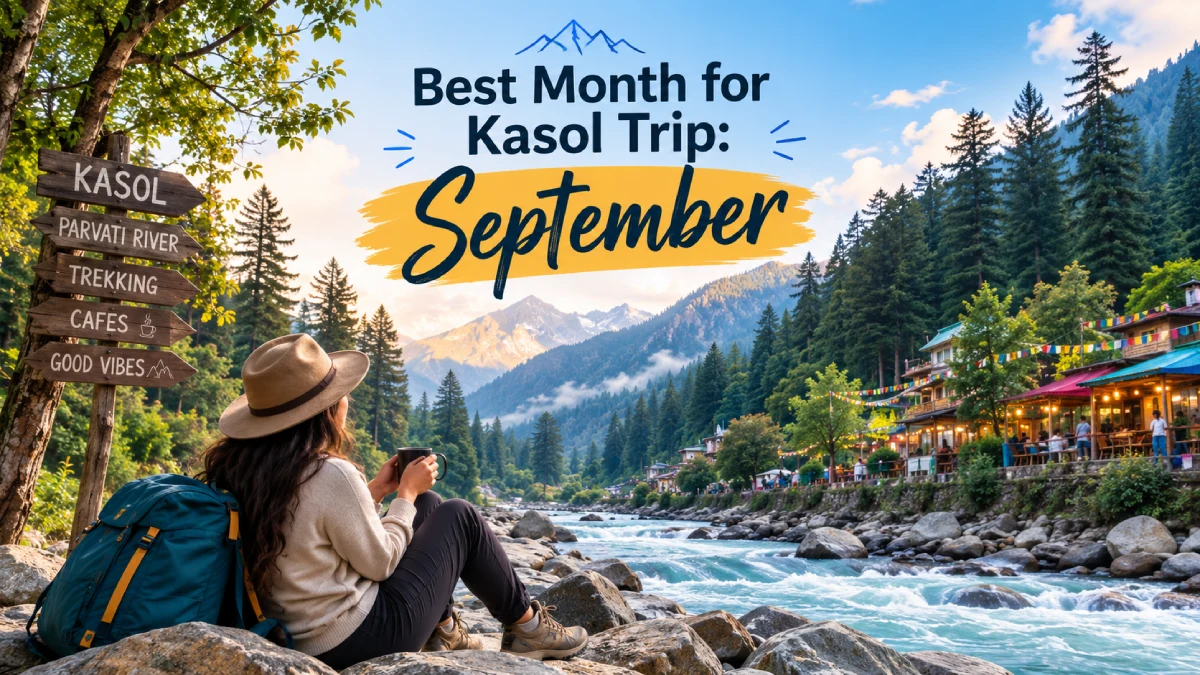
September is widely considered the best month for Kasol trip or a Manali group tour because the monsoon has cleared by early-to-mid September, landslide risk on the hill roads drops sharply, the Parvati and Beas valleys are at their greenest, daytime temperatures sit in a comfortable 15–24°C range, and it falls just before the October–November tourist rush-meaning better hotel rates, shorter queues at Solang Valley or Kheerganga, and a much smoother highway drive for large groups compared to the July-August monsoon months.
The Case for September Over Other Months
Manali and Kasol are listed as best places to visit in Himachal Pradesh and popular almost year-round, but each season comes with a trade-off. Summer (April–June) brings peak crowds and inflated prices. Monsoon (July–August) brings the real risk of landslides on the Chandigarh–Manali highway, especially around Mandi and Kullu, along with sudden road closures that can strand a group for hours. Winter (December–February) means snow-related road closures beyond Manali and much colder Kasol nights.
September threads the needle. The Manali–Leh highway and most trekking routes reopen fully, the Beas and Parvati rivers are flowing strong but no longer in flood, and the landscape hasn’t yet lost its post-monsoon greenery to winter’s brown. It’s also the transition month before the October long-weekend crowds arrive, so campsites, cafés, and guesthouses in Kasol and Old Manali are noticeably less packed.
What a Group Can Experience by Going in September?
Better road conditions for a large vehicle. Groups travelling by tempo traveller or larger buses benefit most from September’s stabilised weather- fewer washed-out sections, less mud, and predictable travel times on the Kiratpur–Bilaspur–Mandi–Kullu stretch.
Milder days, cooler nights. Manali sits around 15–24°C in September, and Kasol slightly cooler in the evenings-comfortable enough for sightseeing all day without heavy winter gear, but crisp enough to enjoy a bonfire at night.
Fuller waterfalls and rivers. Jogini Falls near Vashisht and the Parvati River through Kasol and Tosh both run fuller and more photogenic right after monsoon than they will by November.
Lower prices, more availability. September is shoulder season for both towns, which means group bookings for guesthouses, riverside cafés, and campsites are easier to lock in without the surge pricing of Diwali or Christmas-New Year weeks.
Manali: What to Prioritise in September?
- Solang Valley– Post-monsoon clarity makes for some of the best mountain views of the year, and adventure activities like paragliding resume normal operations once monsoon winds settle.
- Old Manali café strip– A natural gathering spot for larger groups, with river-facing seating that’s especially pleasant once the Beas has cleared up.
- Hadimba Temple and Naggar Castle– Both surrounded by cedar forest that looks its best in the deep green of early autumn.
- Rohtang or Atal Tunnel day trip– Road conditions past Manali stabilise significantly in September, making this a realistic day excursion for groups that couldn’t attempt it in the monsoon months.
Kasol: What to Prioritise in September
- Kheerganga trek — the trail dries out and becomes far less slippery than during monsoon, making it genuinely feasible for mixed-fitness groups.
- Tosh and Chalal villages — short walks from Kasol, ideal for a group that wants a slower day of café-hopping and valley views without a full trek.
- Parvati riverside campsites — many reopen or expand capacity in September after the monsoon, offering bonfire evenings that suit larger friend groups.
- Manikaran Sahib — a short drive from Kasol, easy to combine into a half-day loop with Kasol itself.
3-Day Manali–Kasol Group Itinerary from Delhi
Day 1: Overnight or early-morning departure from Delhi, arriving Manali by evening after roughly 12–14 hours on the road (or split with an overnight halt near Mandi). Evening at Old Manali.
Day 2: Solang Valley in the morning, Hadimba Temple and local market in the afternoon, bonfire evening.
Day 3: Drive to Kasol (around 3.5–4 hours), afternoon at Tosh or Chalal, riverside evening, return to Delhi the next day or extend for Kheerganga.
Which Vehicle is perfect for Travelling as a Group?
The Manali highway involves long stretches, hairpin sections near Kullu, and unpredictable weather even outside monsoon- which is exactly where a group splitting into multiple cars tends to cause delays, since everyone has to regroup at each stop. A single tempo traveller keeps a group together for the entire route, with one driver who knows the hill roads rather than several drivers coordinating separately.
You can book a Delhi to Manali tempo traveller service, or Delhi to Kasol tempo Traveller directly, so a combined Manali-Kasol itinerary doesn’t need a second booking.
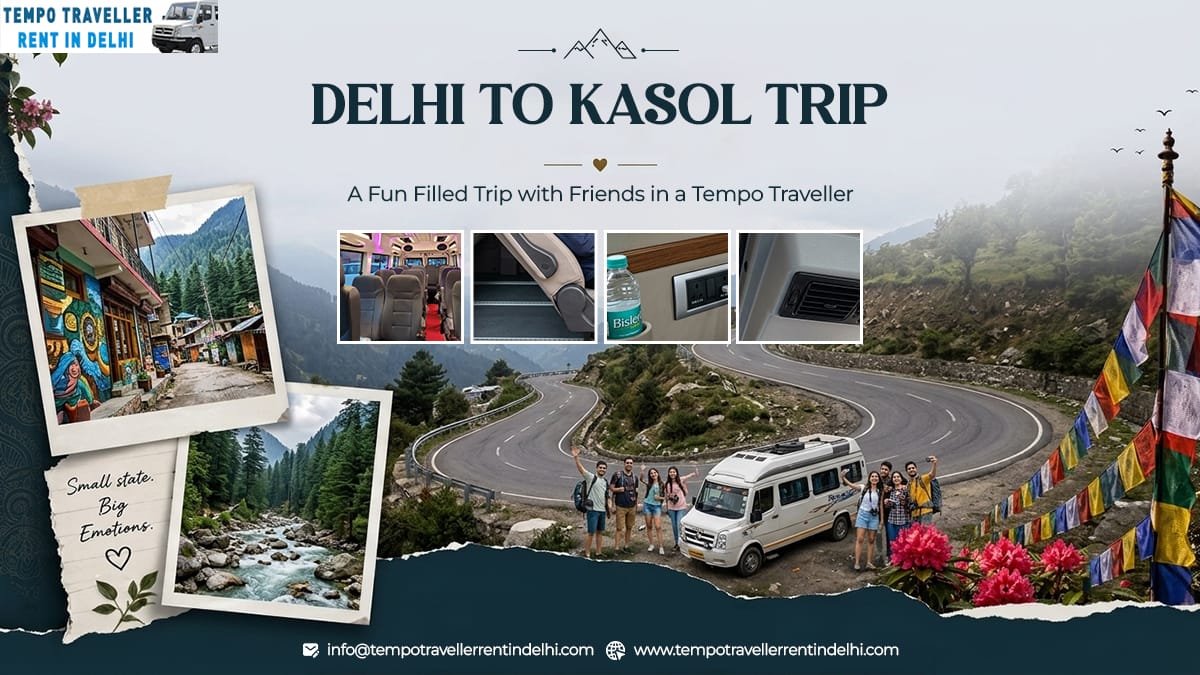
Check this: How to plan a Kasol trip with friends?
FAQs
Is September too early or too late for Manali and Kasol weather-wise?
September sits right after the monsoon withdraws from Himachal Pradesh, by early-to-mid September, and well before the first snowfall, which usually arrives from late November onward in Manali. That makes it a genuinely stable window-not the wet unpredictability of August, and not the cold of true winter.
Are landslides still a risk on the highway in September?
The highest landslide risk is during active monsoon (July–August). By September, rainfall tapers off significantly and road conditions stabilise, though isolated showers can still occur in the first half of the month. Checking recent highway advisories a day or two before departure is still good practice for any hill trip.
Is the Kheerganga trek doable for a group with mixed fitness levels in September?
Yes, more so than during monsoon, when the trail turns muddy and slippery. Post-monsoon, the path firms up considerably, though it’s still a moderate 4–5 hour uphill trek, so groups with very young children or limited mobility may prefer to enjoy Tosh and Chalal instead and skip the full trek.
How much cheaper is September compared to the October-November peak?
Exact savings vary by property, but September generally falls in shoulder season for both Manali and Kasol, meaning guesthouse and campsite rates are typically lower than the surge pricing seen around Dussehra, Diwali, and the year-end holiday period.
Can a large group of 15-20 people travel together comfortably to Manali and Kasol?
Yes, an 18-seater or 20 seater tempo traveller comfortably covers groups this size in one vehicle, which is generally easier for a hill route than coordinating three or four separate cars, since everyone stops, eats, and reaches each destination together.
Is it better to drive overnight to Manali or break the journey?
Both are common. Overnight travel gets a group into Manali by morning, maximising sightseeing time, while breaking the journey with a halt near Mandi or Kullu is more comfortable for families or groups with older members, at the cost of one extra travel day.
