

While most travellers flee the rain, the wise ones pack their bags and drive into it. Here are eight best monsoon destinations near Delhi within striking distance that transform into something extraordinary when the monsoon arrives.
Monsoon season in North India specially in Delhi, Haryana and Punjab region runs July through mid-September. Best window for most destinations: late July to late August– after roads clear from early rains, before the season’s tail-end floods.
There is a particular magic to monsoon travel in India that no other season replicates. The air smells of wet earth and possibility. Waterfalls that don’t exist in March come thundering down hillsides. Forests shift from dusty olive to an almost aggressive emerald. Even the familiar highway you’ve driven a dozen times looks completely different through a rain-spattered windscreen.
Delhi sits at a remarkable geographic crossroads within a day’s drive, you can reach the Shivalik foothills, the Aravallis, the Yamuna plains, the Chambal ravines, and the lower Himalayan ranges. Every direction offers something beautiful when the rains come. Here are the eight we’d stake a monsoon holiday on.
Quick reference- All 8 destinations
Lansdowne — 265 km, weekend
Chopta & Tungnath — 450 km, 3–4 days
Kasauli — 300 km, weekend
Jim Corbett — 240 km, 2–3 days
Dhanaulti — 330 km, 2–3 days
Sariska — 200 km, weekend
Morni Hills — 230 km, day trip
Chakrata — 320 km, 2–3 days
Top 8 Monsoon destinations near Delhi
- Lansdowne, Uttarakhand
The quiet cantonment the monsoon keeps secret
Low crowds Misty forests Colonial charm
Lansdowne is the underdog of Uttarakhand hill stations and monsoon is exactly when it earns its crown. Unlike Mussoorie or Nainital, it never gets crowded enough to feel like a city escaped uphill. The oak and rhododendron forests surrounding the cantonment town soak up the rain and release it as a low, rolling mist that lingers through mornings. The Bhim Pakora balancing rocks, the Tip-in-Top viewpoint, and the calm of Bhulla Lake are all best experienced with clouds drifting through. Roads are generally reliable. The drive through Kotdwar and Pauri Garhwal is itself a monsoon highlight.
| Distance from Delhi | Drive time | Best for | Trip Type | |
| ~265 km | 5.5–6.5 hrs | Couples, solo | Weekend |
2. Chopta & Tungnath, Uttarakhand
The highest Shiva temple draped in monsoon clouds
Trekking Alpine meadows Spiritual
Called the “Mini Switzerland of India” in every brochure, Chopta earns that comparison most convincingly during monsoon when its bugyal (alpine meadow) turns a deep, saturated green. The 3.5 km trek to Tungnath-the world’s highest Shiva temple passes through dense rhododendron forests that drip musically in the rain. The mist rolls in and out dramatically, occasionally parting to reveal Chaukhamba and Kedarnath peaks. The road from Ukhimath to Chopta deserves its own travel essay. Note: the trek can get slippery; trekking poles and waterproof shoes are non-negotiable.
Distance from Delhi: ~450 km
Drive time: 9–10 hrs
Best for: Trekkers, groups
Trip type: 3–4 days
3. Kasauli, Himachal Pradesh
Colonial bungalows, monkey trails, and rain on tin roofs
Easy drive Heritage walks Relaxed pace
Kasauli is the most civilised hill station near Delhi and deliberately so. The British-era cantonment rules limit construction, which means the town looks almost exactly as it did 80 years ago. Monsoon amplifies everything here: the smell of pine resin, the creaking of old wooden bungalows, the sound of rain on corrugated roofs. The Monkey Point walk and Christ Church are delightfully atmospheric in overcast skies. It’s an ideal trip for those who want to do absolutely nothing at altitude- read, eat hot Maggi, and watch the valley disappear in cloud.
Distance from Delhi: ~300 km
Drive time: 5.5–6 hrs
Best for: Families, couples
Trip type: Weekend
4. Jim Corbett, Uttarakhand
The jungle at its densest, greenest, and most alive
Wildlife River drives Off-peak rates
Corbett’s core zones close in monsoon, but the Jhirna and Sitabani zones remain open year-round and they offer something the dry-season visitor never sees. The Ramganga river runs full and fast. The sal forest is impenetrably green. Leopards, elephants, and sloth bears are reliably active. And you’ll have the park largely to yourself since most visitors assume it’s closed. Jhirna in particular is spectacular in July–August, with the grasslands transformed and the entire ecosystem buzzing with post-rain activity. Hotel rates drop by 40–60%, making it a rare moment when Corbett is actually affordable. If you are planning a trip from Delhi to Jim Corbett, find all details in Delhi Corbett Tour guide.
Distance from Delhi: ~240 km
Drive time: 4.5–5.5 hrs
Best for: Wildlife lovers
Trip type: 2–3 days
Find Here: Why Jim Corbett is better than Ranthambore?
Monsoon driving tip
Always check NH-58, NH-7, and the Shivalik stretch forecasts the evening before departure. The India Meteorological Department’s mausam.imd.gov.in gives district-level 3-day outlooks. A 6 AM departure avoids afternoon downpours on mountain roads and gives you flexibility to wait out a cloudburst at a dhaba.
5. Dhanaulti, Uttarakhand
Above the clouds, inside a cedar forest
Deodar forest Eco-park Mussoorie day trip
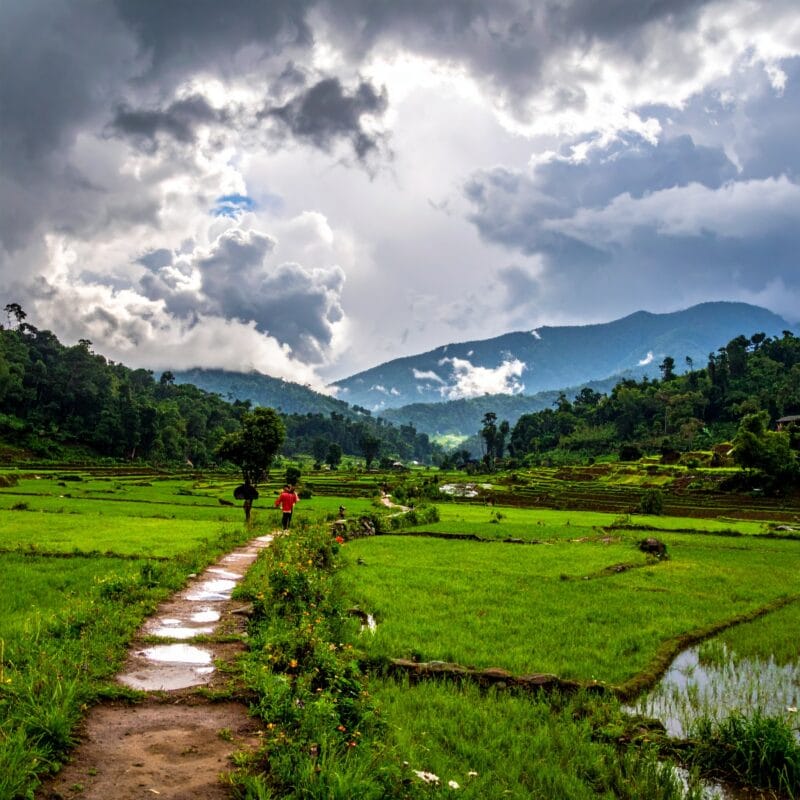
Sitting 2,286 metres above sea level and 24 km past Mussoorie, Dhanaulti is where you go when Mussoorie feels too urban. The Eco Park here- three interconnected parks through deodar and rhododendron forest is genuinely beautiful in monsoon, with moss-covered paths and the sound of rain absorbed entirely by the dense canopy. On clear mornings after a night of rain, the Gangotri and Bandarpunch ranges appear with startling clarity. The town has excellent mid-range properties, and the drive from Dehradun through Mussoorie’s back roads is one of the more scenic approaches in the Garhwal region. You can find some other beautiful places in Uttarakhand to enjoy your summer vacation.
Distance from Delhi: ~330 km
Drive time: 6.5–7.5 hrs
Best for: Families, groups
Trip type: 2–3 days
6. Sariska, Rajasthan
Arid tiger country gone lush and improbable
Tiger reserve Monsoon surprise Easy weekend
Rajasthan in monsoon surprises even those who know it well. Sariska Tiger Reserve, normally an austere khaki landscape of dry deciduous forest, undergoes a complete visual transformation between July and September. The dhok trees leaf out, nilgai graze on fresh grass, and the reserve’s ancient ruins- the Kankwari Fort deep in the jungle- look like something from a lost civilisation emerging from green. The drive from Delhi via Alwar is entirely smooth highway, making this an achievable Saturday overnight. Safari bookings through the Rajasthan Forest Department should be secured two to three days in advance.
Distance from Delhi: ~200 km
Drive time: 3.5–4 hrs
Best for: Weekend warriors
Trip type: Weekend
7. Morni Hills, Haryana
Delhi’s closest hill escape- underrated
Closest hills Twin lakes Day trip friendly
At just 45 km from Chandigarh and under 250 km from Delhi, Morni Hills is the destination that Delhi travellers consistently overlook and consistently discover in monsoon with a sense of guilty wonder. Haryana’s only hill station sits in the Shivalik range and offers forested trails, two natural lakes (Tikkar Taal) that fill beautifully in rain, and almost zero tourist infrastructure which is either a drawback or the entire point, depending on your travel philosophy. The road from Panchkula winds through sal forest and is one of the more pleasantly uncrowded drives from Delhi.
Distance from Delhi: ~230 km
Drive time: 4–4.5 hrs
Best for: Day trips
Trip type: Day / overnight
8. Chakrata, Uttarakhand
A restricted cantonment where time moves differently
Waterfalls Tiger Falls Offbeat gem
Chakrata is the hill station that quietly rewards effort. It requires an Inner Line Permit (obtained easily at the checkpost) and sits off the typical tourist radar meaning the pine and deodar forests around it remain genuinely unspoilt. The Tiger Falls, at 312 feet one of Asia’s highest waterfalls, reaches its spectacular peak in monsoon when it roars with runoff from the surrounding ridges. The Deoban area above Chakrata offers sweeping views when clouds permit, and the drive through Vikasnagar is strikingly beautiful in the rains. Accommodation is basic but the silence is extraordinary. Book Urbania Van on rent in Delhi for a beautiful view of monsoon trips.
Distance from Delhi: ~320 km
Drive time: 6.5–7 hrs
Best for: Offbeat seekers
Trip type: 2–3 days
“The monsoon doesn’t ruin a road trip. It removes the people who were never really there to see it.”
Monsoon packing essentials
- Waterproof rain jacket
- Poncho for waterfalls, jacket for the drive. Both have their moment.
- Trekking sandals or waterproof shoes
- Wet trails destroy regular sneakers within an hour.
- Quick-dry towels
- Microfibre. Two per person. You’ll use both.
- Insect repellent
- Monsoon is peak mosquito season across foothills. Don’t rely on the hotel’s.
- Power bank (large)
- Power cuts are common in hill areas during heavy rain.
- Dry bags / zip locks
- Protect phones, documents, and electronics in your backpack.
How to Make your Monsoon Trip Better?
Planning a monsoon getaway from Delhi becomes even more enjoyable when travel is comfortable and well-organized. Many travelers prefer booking a tempo traveller rental in Delhi for such trips, especially when traveling with family or friends. It allows everyone to stay together, enjoy the scenic rainy drives, and avoid the hassle of managing multiple cars on wet and slippery roads. With spacious seating, proper ventilation, and experienced drivers familiar with monsoon routes, tempo travellers make journeys to nearby destinations smoother and safer. Whether it’s a short weekend escape or a longer hill trip, having a reliable travel option enhances the overall experience and lets you focus on enjoying the monsoon vibes.
Concluding Thoughts
Monsoon travel asks something of you that peak-season travel doesn’t: a willingness to surrender the itinerary when a landslide closes a road, to find beauty in a fog-bound viewpoint that shows you nothing, to sit inside a small dhaba for two hours with a cup of tea while the sky makes up its mind. The travellers who do that- who let the season lead- tend to come back with the best stories. This year, let Delhi’s rain be the signal, not the deterrent.
