


Ranthambore and Jim Corbett National Park are among Top Tiger Reserves in India for best chance of Tiger sightseeing. So, comparing Ranthambore vs Corbett is not good as both are very different from each other. If spotting a tiger is your main concern then it really does not matter which park you go to because the important factor is your luck of spotting a tiger at both places.
Proximity to Delhi makes Corbett the first choice for people living in Delhi NCR and plenty of people go there just to spend a weekend in a greener environment and are not even looking for a tiger to give you an idea of what local tourists do there.
However, beyond just the stripes, the experience at both parks varies wildly. Let us break it down so you can decide which jungle vibe suits you best.
The Crowd and The Vibe
This is where the difference between Ranthambore vs Corbett is clearly visible. Proximity to Delhi makes Corbett the first choice for people living in Delhi NCR. Many people go there just to spend a weekend in a greener environment and are not even looking for a tiger, just to give you an idea of what local tourists do there.
Because Corbett is filled with hundreds of luxury resorts along the Kosi River, it attracts big families, corporate offsites, and destination weddings. You will often find the “loud Delhi crowd” sipping away their beer around a fire at the resorts outside Corbett, treating the jungle as a party hub.
Ranthambore, on the other hand, gets very determined visitors. Located in the Sawai Madhopur district of Rajasthan, it feels more serious. The people here are usually laser-focused on one thing: the wildlife. They are up at 5:00 AM, cameras ready, fighting for a seat in a Gypsy. You won’t see the same party culture here; it’s a dusty, rugged town that exists entirely for the tiger. To visit both of these wildlife wonders, you can go for Tempo Traveller Hire in Delhi for a comfortable and enjoyable trip throughout.
For small groups and families planning a road journey, booking a 12 Seater Tempo Traveller on Rent in Delhi can make travel between these national parks convenient and stress-free.
Opening Months: A Deciding Factor
Another deciding factor for your visit to either of the national parks is their opening months. This is crucial because if you turn up at the wrong time, you might not get into the core areas at all. Below are the times when Corbett and Ranthambore are open to the public:
Corbett National Park: The crown jewel of Corbett, the Dhikala Zone, opens on 15th November and stays open up until 15th June. While the Jhirna and Dhela zones remain open all year round, the main core areas (Dhikala and Bijrani) are closed to the public during the monsoon (July to mid-November). This is because the heavy rains in Uttarakhand swell the rivers and take a toll on roads inside the park, making it impossible to drive on the dirt tracks due to the mud.
Ranthambore National Park: The core zones (Zones 1-5) remain open between 1st of October through to 30th of June. They remain closed in the months of July to September. (Note: The buffer zones, specifically Zones 6-10, often remain open during the monsoon, but sightings are generally harder as the vegetation is thick).
As you can see, there is a difference in opening dates. If you are planning a visit between 1st of October to 15th of November, your best option for a core-zone safari is Ranthambore, as Corbett’s Dhikala zone remains closed to the general public during those days.
I hope this gives you a better perspective and helps you in choosing the right national park of your liking. To plan a trip with friends to both of these 2 places, book 16 Seater Tempo Traveller on Rent. If you ask me which one you should go to, I would say both. But since you likely have to pick one, let us first differentiate the two national parks with updated statistics and logistics:
1. Ranthambore National Park
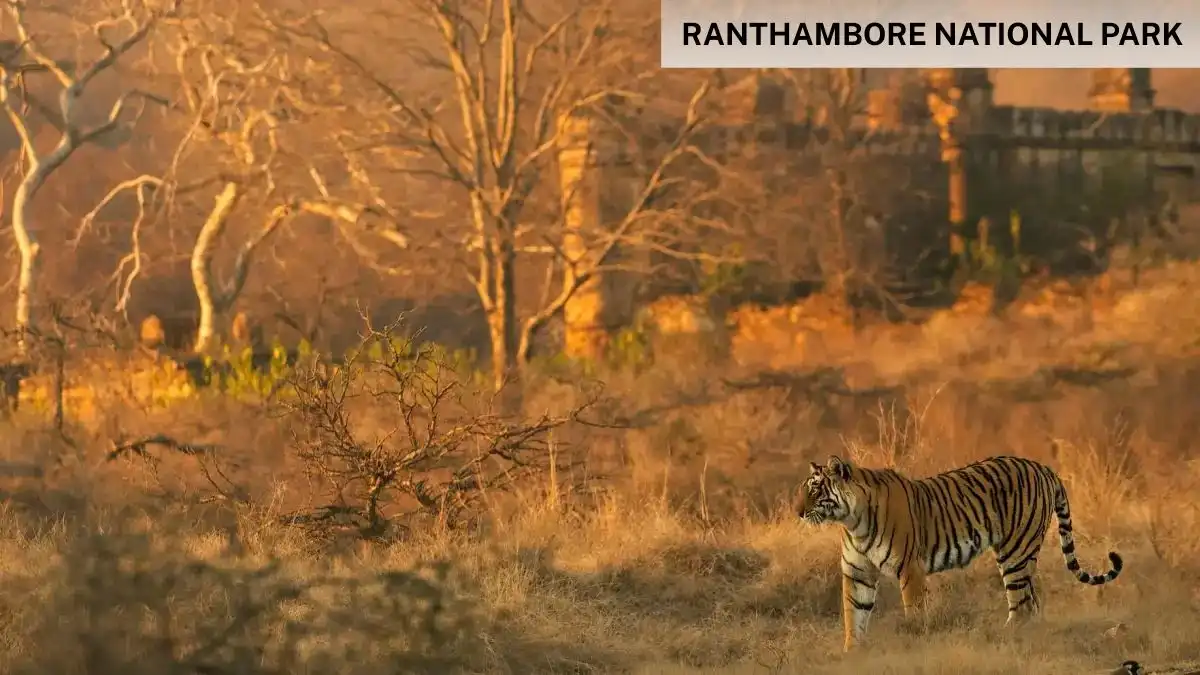
- Location: Sawai Madhopur District of Rajasthan. The park is famous for the historic Ranthambore Fort that towers over the jungle.
- Area: Approx 1,334 sq km (Core + Buffer).
- Tiger Status: High density. Current estimates suggest 88+ tigers. Because the park area is smaller than Corbett, the density feels higher.
- Other animals found: Leopard, sloth bear (very common here compared to other parks), sambar deer, wild boar, hyena, chital, and rhesus macaque.
- Reptiles: Tortoise, crocodile (marsh muggers are everywhere in the lakes), cobra, and rat snakes.
- Birds: Woodpecker, owl, pigeon, dove, pelican, and flamingo.
- Plants and trees: About 300 species. The forest is dry deciduous, meaning Dhok, Banyan, and Pipal trees dominate the landscape. This lack of undergrowth improves visibility.
- Zones: The park is divided into 10 zones. Zones 1-5 are the premium “core” zones with historically higher tiger sightings and beautiful lake views. Zones 6-10 are buffer zones. While many prefer 1-5, sightings in Zone 6 (Kundal) and Zone 10 have been fantastic in recent years.
- Estimated Safari Costs (2024-25):
- Indian Nationals: Approx ₹1,700 – ₹2,200 per person.
- Foreign Nationals: Approx ₹3,500 – ₹4,800 per person.
- Note on Vehicles: You can choose between a Canter (20-seater bus) or a Gypsy (6-seater jeep). The Gypsy is much more expensive but highly recommended for flexibility.
- Probability of Seeing Tigers: High. The dry terrain means tigers have fewer places to hide.
Know Here: Delhi to Jim Corbett Tempo Traveller Rates
2. Jim Corbett National Park
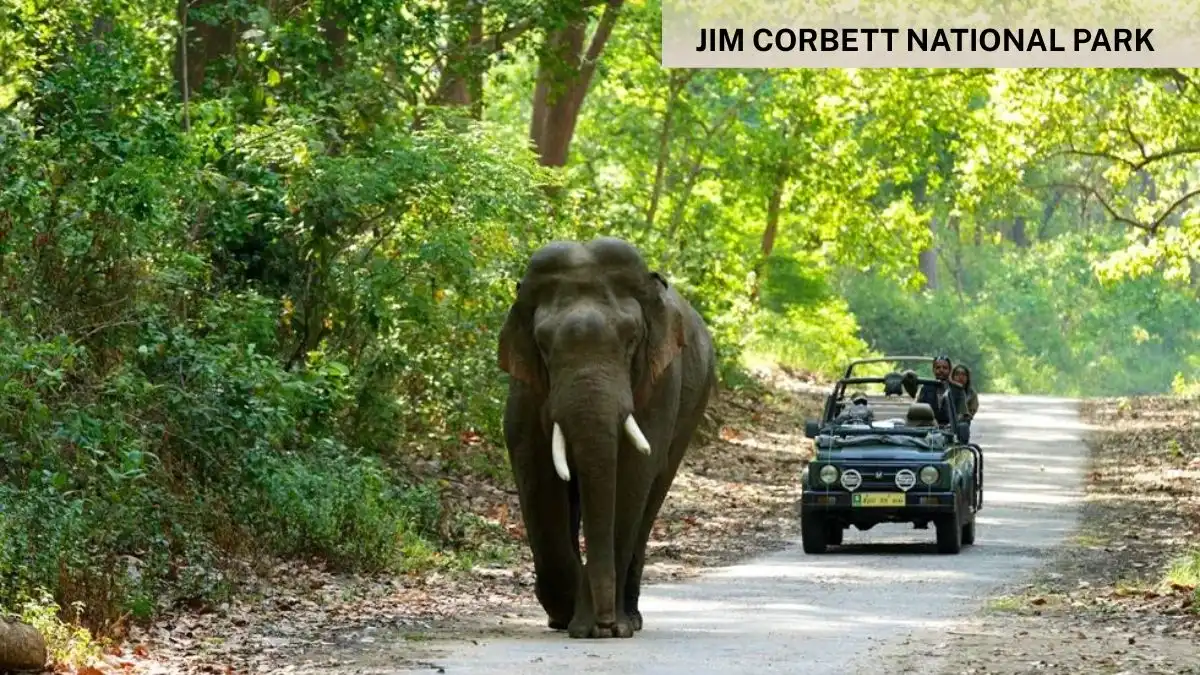
- Location: Nainital District of Uttarakhand. It’s the oldest national park in India, established in 1936.
- Area: 1,288 sq km (Reserve area). The landscape is vast, featuring riverbeds, hills, and grasslands.
- Tiger Status: Highest population in India. Current estimates suggest 260+ tigers. However, they have a massive area to roam.
- Other animals found: Wild Elephant (this is the major attraction that Ranthambore lacks), leopard, barking deer, sambar deer, Himalayan black bear, chital, and otter.
- Reptiles: Indian python, King Cobra, and the critically endangered Gharial.
- Birds: A birdwatcher’s paradise with over 600 species. If you love birds, Corbett is the place to go for you without a single doubt.
- Plants and trees: Consists mainly of dense Sal forests and river grasslands. The vegetation is lush and green, which is beautiful but makes spotting difficult.
- Zones:
- Dhikala: The most famous zone with large grasslands (Chaur). It is the only zone where you can stay the night inside the forest lodge (highly recommended).
- Bijrani: Excellent for tiger sightings, known for its open grasslands and high density of game.
- Jhirna & Dhela: Open for tourists all year round. Good for sloth bears and elephants.
- Durga Devi: Hillier terrain, famous for bird-watching and Mahseer fish in the river.
- Phato: A newer zone that has become popular for quick sightings.
- Estimated Safari Costs (2024-25):
- Jeep Hire (Indian): Approx ₹6,500 – ₹8,500 per jeep (up to 6 people).
- Jeep Hire (Foreigner): Approx ₹12,000 – ₹15,000 per jeep.
- Note: In Corbett, the pricing model is different. You usually book the whole Jeep, not just a seat. This makes it expensive for solo travelers but economical for groups.
- Probability of Seeing Tigers: Medium to High. There are more tigers here than anywhere else, but the beauty of the Sal forest to hide is excellent. You have to work harder for your sightings.
Suggested Read: How to plan 7 Days Trip to Uttarakhand
Insider Tips for Sightings
There you go. That’s the logistical side of things. But let’s talk about strategy.
Since Ranthambore National Park has a dry deciduous terrain, there is a higher visibility of tigers there. The backdrop of the ancient fort and the ruins makes for dramatic photography that you won’t get anywhere else in the world. For higher chances of seeing tigers, try going to the three lakes there: Padam Talao, Raj Talao, and Malik Talao. Tigers are like us; they hate the heat. They can usually be found in these watering holes.
The months of March, April, May, and June are the absolute best for seeing tigers in Ranthambore. Yes, the heat is unbearable (often crossing 40°C), but the forests here dry up completely and trees shed their leaves. There’s less hiding spots for the tigers because of this, and they are forced to come to the remaining water bodies to cool off.
But don’t dismiss Jim Corbett National Park already. The thrill here is different. It’s about the “Calls of the Jungle.” One tip: go to the Bijrani Zone or the Dhikala grasslands. You can find the prey of tigers there as well as the tigers themselves if you’re lucky.
The presence of wild elephants in Corbett adds a whole different thrill that Ranthambore lacks. Seeing a herd of elephants crossing the Ramganga river with the cloudy mountains in the background is a sight that rivals any tiger sighting. Also, if you are a photographer, the light in Corbett filtering through the Sal trees is magical, even if it makes focusing harder.
Final Thoughts
Tiger sightings depend on luck as well. I cannot stress this enough. Some people have already taken a few visits and still, they weren’t able to see tigers. Others were able to see tigers in just their first visit. so the final call for choosing between Ranthambore vs Corbett is up to you.
- Choose Ranthambore if: You want the highest probability of a sighting, you love history/ruins, and you don’t mind the heat and dust.
- Choose Corbett if: You want a complete jungle experience with elephants, birds, and rivers, and you are okay with the fact that the tiger might stay hidden in the tall grass.
Find This Useful Guide: How to Reach Jim Corbett from Delhi?
The summer months of March through June are the best months for spotting tigers in both parks. Good luck!
