


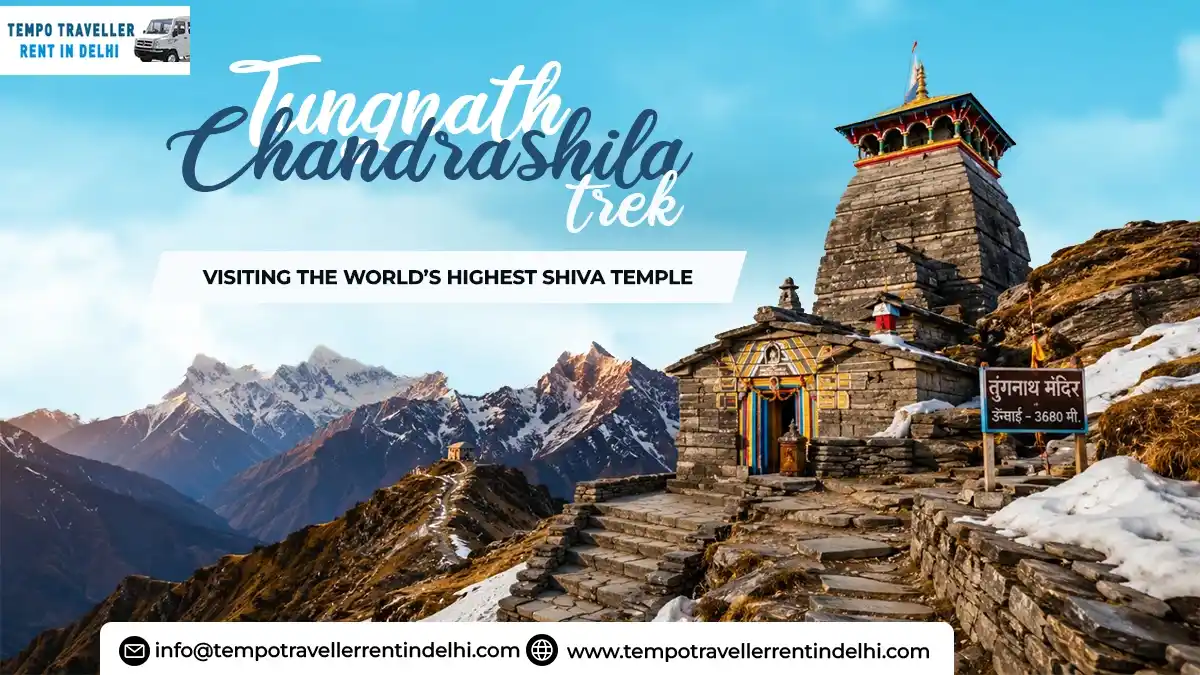
At 3,680 metres above sea level, the Tungnath Temple holds the record as the world’s highest Shiva temple- a title that carries both spiritual weight and trekking prestige. The trail from Chopta to Tungnath and onwards to the Chandrashila summit (4,130 m) is one of the most breathtaking, accessible, and deeply moving treks in all of the Himalayas. This guide covers everything you need to know.
The Tungnath-Chandrashila trek is part of the Panch Kedar circuit- the five sacred Shiva shrines of Garhwal. While Kedarnath receives far more visitors (and far more press), Tungnath offers a comparably powerful spiritual experience with significantly less crowd, a shorter and more accessible trail, and one of the most extraordinary summit views in the Indian Himalaya.
From the Chandrashila summit, on a clear day, you can see Nanda Devi, Kedarnath, Chaukhamba, Trishul, Neelkanth, Bandarpunch, and the entire arc of the Garhwal Himalaya. It is the kind of view that rearranges something inside you.
“Tungnath does not shout. It does not have the infrastructure of Kedarnath or the crowds of Badrinath. It simply sits at 3,680 metres and waits- patient, ancient, and magnificent.”
At a Glance: Tungnath-Chandrashila Trek
| Detail | Info |
|---|---|
| Trek Base | Chopta (2,680 m) — “Mini Switzerland of Uttarakhand” |
| Tungnath Temple Altitude | 3,680 m (12,073 ft) — World’s Highest Shiva Temple |
| Chandrashila Summit Altitude | 4,130 m (13,550 ft) |
| Trek Distance (one way) | 3.5 km to Tungnath + 1.5 km to Chandrashila = 5 km one way |
| Total Trek Distance (round trip) | ~10 km |
| Trek Duration | 5–6 hours (round trip) |
| Difficulty | Easy to Moderate (suitable for beginners) |
| Best Season | May–June and September–November |
| Distance from Delhi | ~450 km (Chopta) via Rishikesh–Rudraprayag–Ukhimath |
The Spiritual Significance of Tungnath
Tungnath is one of the Panch Kedar- the five sacred shrines of Lord Shiva embedded in the Garhwal Himalaya. Legend from the Mahabharata holds that after the Kurukshetra war, the Pandavas sought Lord Shiva’s forgiveness for the sin of killing their own kin. Shiva, unwilling to be easily found, took the form of a bull and hid in the Garhwal mountains. When Bhima caught the bull by its tail and hump, the bull disappeared, but different body parts manifested at five different locations: the Panch Kedar shrines.
At Tungnath, the arms (bahu) of Lord Shiva are believed to have appeared. The temple is constructed in the North Indian (Nagara) architectural style and dates back over 1,000 years- though it is believed to be even older in origin, associated with the Pandavas themselves. Every year, the temple opens in May after the winter months and closes in November when the priest accompanies the deity’s symbolic image to Mkkunath (winter seat) at Ukhimath.
For pilgrims, the trek to Tungnath is an act of devotion. For trekkers, it is an act of awe. For those who are both, it is something altogether different- a conversation between the human and the infinite.
The Trek Route: Chopta to Tungnath to Chandrashila
Trek Route Overview
Chopta (2,680 m) → Tungnath Temple (3,680 m) → Chandrashila Summit (4,130 m)
- Chopta to Tungnath: 3.5 km | ~2 hours | Paved stone path with gradual ascent
- Tungnath to Chandrashila: 1.5 km | ~45 minutes | Steeper, rocky trail
- Chandrashila to Chopta (return): ~2.5 hours
The trail from Chopta begins through dense rhododendron and oak forests. In April and early May, these forests burst into crimson and pink bloom- one of the most spectacular natural displays in the Uttarakhand mountains. As you gain altitude, the tree line recedes and you enter the alpine meadows (bugyals)- vast, open grasslands that stretch for miles.
The stone-paved path to Tungnath is well-maintained and manageable even for first-time trekkers. The gradient is steady but not exhausting. Most moderately fit adults can complete this stretch in under 2 hours. Along the way, small dhabas sell tea, Maggi, and basic snacks- a welcome presence on cold mornings.
From Tungnath Temple, the Chandrashila trail begins. This section is steeper and rockier, and requires careful footing, particularly in icy or snowy conditions. The final push to the summit is rewarded with what many trekkers describe as the most complete Himalayan panorama visible from any accessible peak in India.
What You See from Chandrashila Summit
On a clear day, the 360° view from Chandrashila (4,130 m) includes some of the most iconic peaks in the Indian Himalaya:
- Nanda Devi – India’s second-highest peak and sacred goddess mountain
- Chaukhamba – the four-peaked massif above Badrinath, named “Four Pillars”
- Kedarnath Peak – the sacred summit above Kedarnath shrine
- Trishul – the three-pronged peak near Roopkund
- Neelkanth – the “Queen of Garhwal Himalaya”
- Bandarpunch and Black Peak – visible to the northwest
The view of the sun rising over this range- with the sky turning from deep blue to orange to blazing gold over the Himalayan arc is an experience that no description can adequately capture. Many trekkers make the effort to camp near Chopta to begin the summit attempt in the dark (3 AM) and reach Chandrashila for sunrise.
Suggested Read: All Information about Panch Badri Temples in Uttarakhand
Recommended Itinerary for Tungnath Temple from Delhi
Day 1
Delhi to Chopta (Night Drive) — Depart Delhi in a Tempo Traveller at 9–10 PM. Drive via Haridwar → Rishikesh → Devprayag → Rudraprayag → Ukhimath → Chopta. Arrive Chopta by 7–9 AM on Day 2. Have breakfast, acclimatise. Rest for 2–3 hours before the trek.
Day 2
Chopta → Tungnath → Chandrashila → Chopta — Begin trek at 6–7 AM. Reach Tungnath by 8:30 AM for morning aarti. Proceed to Chandrashila summit by 10 AM. Spend 45 minutes at the summit. Return to Chopta by 1–2 PM. Afternoon rest. Overnight stay at Chopta guesthouses or camping sites.
Day 3
Chopta → Deoria Tal → Delhi — Morning visit to Deoria Tal (a stunning reflection lake, 2 km trek from Sari village, ~45 minutes from Chopta). The lake offers a perfect reflection of the Chaukhamba peaks. Return to Sari village. Depart for Delhi by noon, arrive by evening/night.
Optional Add-on: Devotees visiting Kedarnath and Badrinath often combine the Tungnath trek with the Char Dham Yatra circuit. Ukhimath (Tungnath’s winter seat) is also worth a visit, especially if the temple season has not yet begun.
Best Time to Visit Tungnath and Chandrashila
- May–June: The temple opens (usually early May). Rhododendrons are in bloom. Excellent trekking conditions. Slightly crowded on weekends. You can also plan this trip with Kedarnath Yatra Itinerary.
- July–August (Monsoon): Paths can be slippery. Clouds may obstruct summit views. Not recommended for summit attempts. The forest, however, is lush and beautiful.
- September–October: Post-monsoon clarity. The best views of the year. Clear blue skies, fresh air, crisp temperatures. Highly recommended.
- November: The temple closes after Diwali. Snow begins to appear at higher altitudes. Last chance for the year – beautiful and dramatic if snow is present.
- December–April: The area is buried under 4–6 feet of snow. The temple is closed. Only for experienced trekkers with proper winter gear. Not suitable for beginners.
How to Reach Chopta from Delhi?

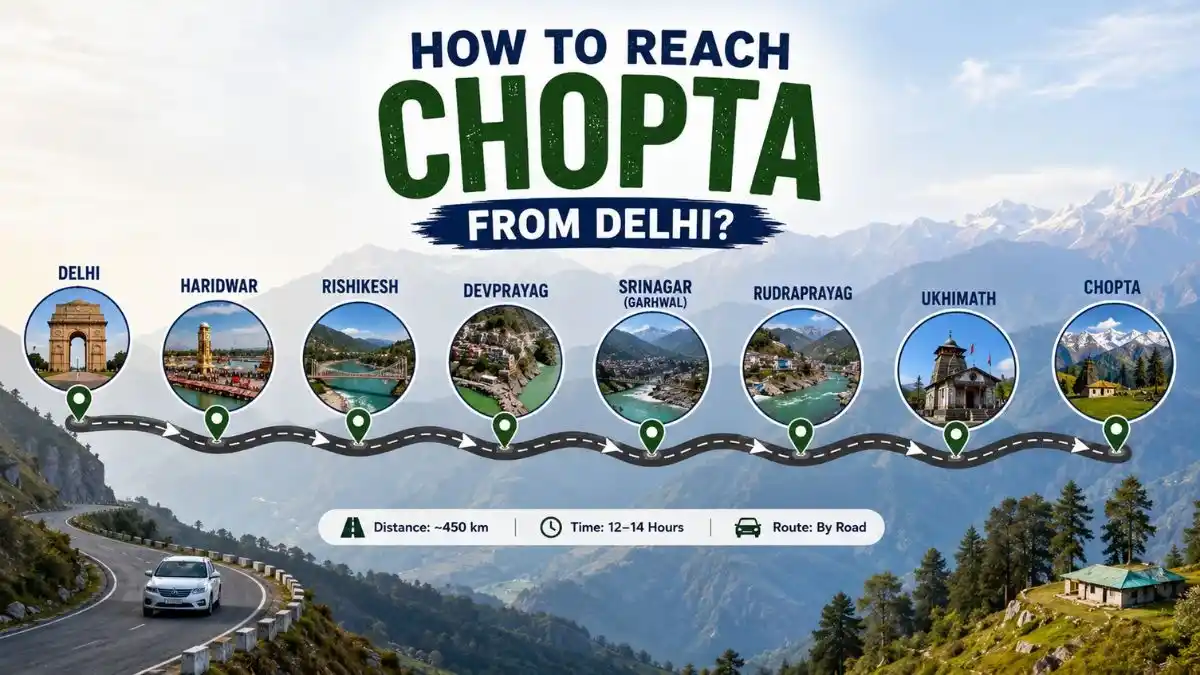
The most common route from Delhi to Chopta (the trek base) is via the Rishikesh–Rudraprayag highway:
Delhi → Haridwar → Rishikesh → Devprayag → Srinagar (Garhwal) → Rudraprayag → Ukhimath → Chopta
The total distance is approximately 440–460 km and takes 10–12 hours by road. The route passes through some of the most scenic stretches of the Garhwal Himalaya – the confluences at Devprayag (Ganga formation), the gorges of Rudraprayag, and the Ukhimath valley.
For groups of 8–15 trekkers- friends, families, office colleagues- booking Urbania Van on rent in Delhi is by far the best option. It keeps the group together, allows for overnight travel, and the driver can handle the mountain roads from Rudraprayag to Chopta, which become narrow and winding. Our drivers are experienced with Uttarakhand routes including Chopta, Kedarnath, and the Char Dham circuit.
🚐 Organising a Tungnath trek from Delhi? Book a Tempo Traveller for your group- night departures available, experienced mountain drivers, 9 to 26 seater options.
What to Pack for the Tungnath-Chandrashila Trek
- Layered clothing – Thermal base layer, fleece mid-layer, waterproof wind jacket
- Trekking boots with ankle support – The rocky Chandrashila section demands good footwear
- Trekking poles – Helpful on the descent from Chandrashila
- Sunscreen (SPF 50+) and UV-protection sunglasses – UV radiation is intense at altitude
- Warm hat and gloves – Essential even in May and October at 4,000+ metres
- Water bottle and ORS sachets – Hydrate frequently; altitude reduces thirst sensation
- Energy bars, nuts, and chocolate – For sustained energy on the climb
- First aid kit – Include altitude sickness medication (Diamox — consult a doctor)
- Torch/headlamp – Essential for early morning summit attempts
- Camera – You will take hundreds of photographs. Take hundreds more.
Altitude Sickness: What You Need to Know
Chandrashila at 4,130 m is high enough for altitude sickness to be a genuine concern, especially for first-time high-altitude trekkers. Key precautions:
- Acclimatise at Chopta– Spend 2–3 hours at Chopta (2,680 m) before beginning the trek. Do not rush straight from the vehicle to the trail.
- Ascend slowly– Take regular breaks. Do not race up the trail.
- Hydrate constantly– Drink at least 3–4 litres of water per day.
- Recognise symptoms– Headache, nausea, dizziness, and breathlessness are warning signs. Descend immediately if symptoms worsen.
- Avoid alcohol the night before– It dehydrates you and impairs altitude adaptation.
- Consult a doctor about Diamox (acetazolamide) if you have had altitude sickness before.
Accommodation Options Near Chopta
Chopta has a range of basic guesthouses, forest rest houses, and camping sites. The GMVN (Garhwal Mandal Vikas Nigam) Tourist Rest House at Chopta is reliable and bookable in advance. Private guesthouses have expanded significantly in recent years. For a more immersive experience, camping under the stars at Chopta with the Himalayan silhouette against the night sky is unforgettable.
Budget accommodation: ₹600–1,200 per room. Mid-range options: ₹1,500–2,500. For large groups, blocking an entire guesthouse or campsite is economical and practical.
Frequently Asked Questions
Is the Tungnath-Chandrashila trek suitable for beginners?
Yes. The Chopta to Tungnath section (3.5 km) is paved and well-maintained- comfortable for beginners, children (8+), and moderately fit adults. The additional stretch to Chandrashila is steeper and slightly challenging but still accessible for fit beginners with trekking poles. No technical climbing required.
When does the Tungnath Temple open and close?
The Tungnath Temple typically opens in late April or early May (around Akshaya Tritiya) and closes in November, usually a few days after Diwali. The exact dates vary each year based on the Hindu calendar and are announced by the Badrinath-Kedarnath Temple Committee.
Can the Tungnath trek be done in one day from Delhi?
It is possible but not recommended. The drive from Delhi to Chopta takes 10–12 hours. Doing it as a 3-day trip (overnight drive, trek day, return) is far more enjoyable and allows for proper acclimatisation. Rushing causes altitude sickness and robs you of the experience.
Is Tungnath trek open in December?
The temple is closed in December. The trail may be accessible with 2–3 feet of snow, but conditions are unpredictable and dangerous without proper winter gear and experience. Not recommended for general trekkers in December.
How do I reach Chopta from Delhi without a personal vehicle?
You can take a train or bus to Rishikesh and then hire a taxi to Chopta. However, for groups of 8 or more, booking a Tempo Traveller on Rent in Delhi for Chopta is more comfortable, economical, and practical- the vehicle stays with you for the entire trip.
Can I combine Tungnath with Kedarnath in one trip?
Yes. Many pilgrims do a Panch Kedar circuit combining Tungnath with Kedarnath, Madmaheshwar, Rudranath, and Kalpeshwar. Alternatively, Kedarnath and Tungnath can be combined in a 5–6 day trip, with Deoria Tal added as a rest-day hike.
Tungnath’s Sinking: An Important Note for Visitors
In recent years, the Archaeological Survey of India (ASI) has raised concerns about the structural tilting and sinking of the Tungnath Temple. The ancient stone structure has shown visible subsidence, attributed to climate change-induced soil erosion, permafrost melting, and excessive pilgrim footfall. The ASI is working on conservation measures.
This makes visiting Tungnath now even more meaningful- we may be among the last generations to see the temple in its current, ancient form. Trekkers are urged to practice responsible trekking: carry back all waste, do not damage the trail, and respect the sanctity of the shrine.
Why the Tungnath-Chandrashila Trek Belongs on Every Bucket List
There are treks that test you. There are treks that inspire you. And there are a rare few that do both while also connecting you to something ancient and sacred. The Tungnath-Chandrashila trek is one of those rare few.
It is not the most remote trek in India. It is not the most technical. But it may well be the most complete- offering spiritual power, ecological beauty, Himalayan grandeur, and genuine accessibility within a single 10-kilometre trail. Standing at the Chandrashila summit with the Himalayan giants arranged before you, the ancient stone temple at your back, and the cold thin air in your lungs, you understand why people have been making this journey for over a thousand years.
🏔️ Ready to trek to the world’s highest Shiva temple? Book a Tempo Traveller from Delhi to Chopta for your group. Comfortable, safe, and experienced mountain drivers available 24/7.