


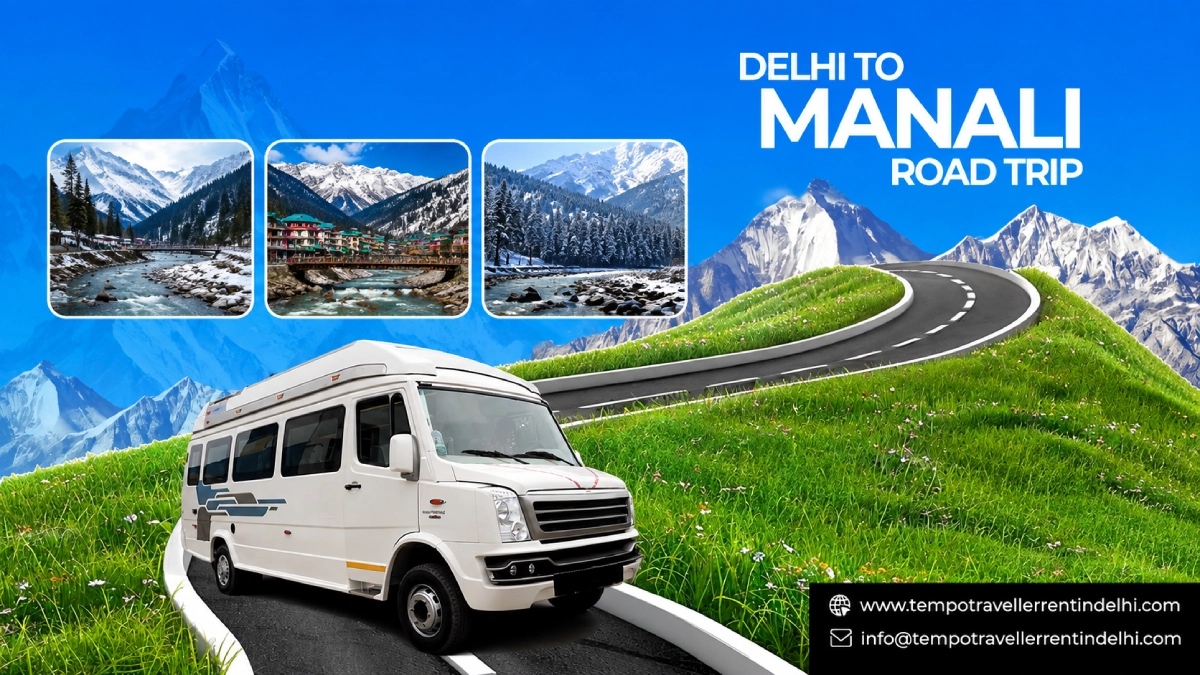
Somewhere past Bilaspur, the plains give way properly and the road starts climbing through pine forest, and that’s the point when everyone in the vehicle stops scrolling their phone and just looks out the window. The Delhi to Manali road trip covers 530-570 km drive on one way depending on the route, and it’s one of the most popular road trips out of the capital for good reason. It’s long enough to feel like a proper journey, short enough to manage in a day if you push it, and the landscape changes so dramatically along the way that the drive itself becomes part of the holiday rather than just the means of getting there.
How Long Does the Drive from Delhi to Manali Take?
Most groups take 10-12 hours if they are doing it in a single stretch, though the last two hours through the winding hill roads near Kullu and Manali always take longer than the map suggests. A lot of families and friend groups now split the journey with an overnight halt in Chandigarh or somewhere near Bilaspur, which turns a punishing single-day drive into a much more relaxed two-day trip. If you’re travelling with kids, older parents, or anyone prone to motion sickness on hill roads, the overnight break isn’t a luxury, it’s basically necessary for everyone to arrive in decent shape.
Route Breakdown: Delhi to Chandigarh to Manali
The most common route runs Delhi – Karnal – Ambala – Chandigarh – Bilaspur – Mandi – Kullu – Manali, almost entirely on NH44 and NH3, both well-maintained highways for most of the stretch.
Delhi to Chandigarh (roughly 250 km, 4-5 hours): This section is fast, flat, and mostly toll highway. It’s a good stretch to knock out early, ideally leaving Delhi before sunrise to skip the worst of the outbound traffic near Panipat and Karnal.
Chandigarh to Manali (roughly 310 km, 7-8 hours): This is where the trip changes character. Past Bilaspur, the road starts winding along the Sutlej river gorge, and past Mandi, the climb toward Kullu Valley properly begins. This section demands a driver who’s genuinely comfortable with hill roads, since the last stretch involves sharp curves, occasional landslide-prone patches during monsoon, and traffic bottlenecks near Kullu town during peak season.
If your group has the flexibility, breaking the journey at Chandigarh for the night, or even pushing on to Bilaspur or Mandi before stopping, makes the second day’s drive noticeably shorter and leaves everyone fresher for their first evening in Manali.
Best Time of Year to Make Delhi to Manali Trip
Manali works as a destination almost year-round, but the road trip itself is easiest between March and June, and again from September through November. Summer months bring pleasant hill weather and clear roads, though Manali gets crowded and hotel prices climb during peak vacation season in May and June. Monsoon, roughly July through early September, brings landslide risk on the Chandigarh-Manali stretch, and while the drive is still doable, it needs more caution and flexibility around timing.
Winter, particularly December through February, turns Manali into a snow destination, which is beautiful but changes the driving conditions significantly, since roads near Solang Valley and higher points can ice over. If you’re planning a winter trip specifically for the snow, it’s worth checking recent road conditions before departure, since some sections do get temporarily closed after heavy snowfall.
Good Stops Along the Way of Delhi to Manali
Breaking up the drive isn’t just about rest, some of these stops between Delhi to Manali Trip are genuinely worth the time on their own.
- Karnal: A reasonable first breakfast stop about 2 hours out of Delhi, with several good dhabas along the highway.
- Chandigarh: The natural midpoint and best overnight option for a two-day version of this trip. Sector 17 and Rock Garden are worth a couple of hours if you have time.
- Bilaspur: Good lunch stop with views starting to open up over the Gobind Sagar reservoir.
- Kiratpur Sahib: A significant Sikh pilgrimage site right off the highway, worth a short stop even for non-religious travellers for the setting alone.
- Mandi: Roughly 2.5-3 hours from Manali, this old town along the Beas river makes a good final break before the last winding stretch into Kullu Valley.
- Aut Tunnel: A short but memorable stretch of road that cuts through the mountain and shaves real time off the older route through Pandoh. If your group wants to detour toward the quieter Tirthan Valley, this tunnel is the turn-off point, and it’s covered in more detail among the more offbeat options in this list of epic road trips from Delhi. You can extend your trip with some most beautiful places near Manali.
Choosing the Right Vehicle for Hill Roads
Hill driving is genuinely different from flat highway driving, and the vehicle matters more here than on a straightforward plains route. You want something with a driver experienced specifically in mountain roads, not just highway driving, since the skills involved in navigating hairpin bends near Kullu are different from cruising NH44. For groups of 8-10, a 9 seater tempo traveller handles the hill sections comfortably without feeling unwieldy on the tighter curves closer to Manali. Larger groups travelling together, whether for a college reunion or an extended family holiday, often prefer a 16 seater tempo traveller so the whole group stays together rather than splitting across multiple cars navigating the same winding roads separately.
If comfort on the long hill stretches matters more to your group than budget, it’s worth reading about how the Maharaja Tempo Traveller variant handles exactly this kind of multi-hour mountain drive, since the seat recline and legroom make a genuine difference by hour seven or eight on the road.
What to Do Once You’re in Manali
Manali rewards travellers who give it more than a rushed overnight stop. Rohtang Pass, when open, offers some of the most dramatic mountain views in Himachal, though permits and seasonal closures need checking in advance. Solang Valley works well for adventure activities in summer and snow sports in winter. Old Manali’s cafes and the Hidimba Temple’s cedar forest setting are worth a slow afternoon rather than a quick photo stop. For a fuller breakdown of the best time to visit, the top attractions, and how to sequence a few days here, this Manali travel guide covers the details well.
Practical Tips Before You Set Off
Fill your tank fully before leaving Chandigarh, since fuel stations thin out on the hill stretch and prices climb the higher you go. Keep some cash on hand, since card and UPI acceptance gets patchy in smaller hill towns. Pack layers regardless of season, since temperatures drop fast once you gain altitude, even on a warm day down in Chandigarh. If anyone in your group struggles with motion sickness, keep medication handy and try to seat them toward the front, since the hill section from Mandi onward involves a lot of continuous turning. And build in buffer time. Hill roads rarely move at the pace Google Maps suggests, especially during peak tourist season when traffic backs up near Kullu.
Read This: How to plan a Manali trip under Rs 6,000?
Toll Roads, Permits, and Other Small Details
The Delhi-Chandigarh stretch runs on a proper toll expressway, so budget a few hundred rupees in toll charges for the outbound and return journey combined. Beyond Chandigarh, tolls thin out but road quality stays decent until the final approach into Kullu Valley, where narrower stretches and occasional construction can slow things down unpredictably.
If your itinerary includes Rohtang Pass, note that private vehicles need an online permit that’s capped daily and often sells out during peak season, so this is worth arranging well before you leave Delhi rather than trying to sort it out once you’re already in Manali. Some sections near the pass also rotate open days for petrol and diesel vehicles separately, so check current rules close to your travel date rather than relying on older information.
How This Compares to Other Himachal and Uttarakhand Routes
If you’re weighing Manali against other hill destinations from Delhi, it helps to know how the drive compares. Shimla is shorter and easier, making it a better choice for a quick weekend with less driving fatigue. Dharamshala and McLeod Ganj sit at a similar distance to Manali but involve less dramatic elevation gain along the way.
If your group is drawn to quieter, less touristy hill towns, some travellers choose to extend a Manali trip toward Jibhi or the Tirthan Valley instead of turning back immediately, since the detour off the Aut Tunnel leads into forest and river country that feels far removed from Manali’s more commercial main market. Comparing a few of these options side by side before locking in dates can save you from discovering halfway through planning that a different route would have suited your group’s pace and interests better.
Wrapping Up
The Delhi to Manali road trip earns its popularity honestly. It’s accessible enough for a long weekend, rewarding enough to stretch into a full week, and the drive itself, plains giving way to rivers giving way to pine-covered mountains, is genuinely one of the better parts of the whole trip. Plan the route with realistic timing, choose a vehicle suited to hill roads rather than just flat highway comfort, and give yourself at least a couple of unhurried days once you actually reach the valley.