


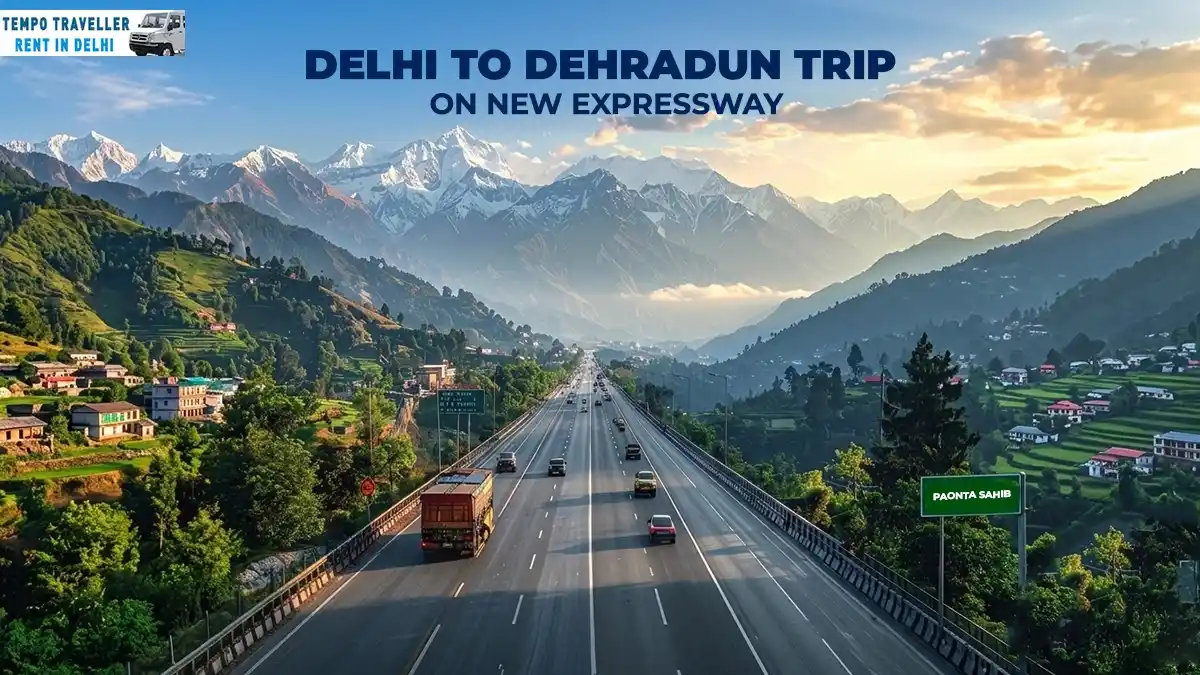
The road that once ate your entire Saturday now slips by before your morning chai goes cold. Here’s what the Delhi–Dehradun Expressway means for every hill-lover in North India. Find all details of Delhi to Dehradun Trip such as travel time, new route, distance and optimized travel itinerary of Rishikesh Mussoorie.
3 hours Delhi to Dehradun
213 km total length
12 tunnels built
6+ hours saved vs old route
The Saturday That Used to Disappear
Ask anyone from Delhi who loves the mountains and they’ll describe the same grim ritual. You set your alarm for 4 AM, load the car with bags, thermoses, and misplaced optimism, and inch your way through Ghaziabad, Meerut, Muzaffarnagar, Roorkee, and Haridwar- arriving in Dehradun somewhere between exhaustion and regret, usually around lunchtime or later. The 280-odd kilometre journey swallowed eight to ten hours on bad days. Weekend getaways to Mussoorie and Rishikesh were logistically possible but emotionally punishing.
That calculus has permanently changed. The Delhi–Dehradun Expressway- officially the Delhi–Saharanpur–Dehradun Economic Corridor slashes that journey to roughly 2.5 hours under normal traffic conditions. For the 35 million residents of the Delhi-NCR region who have long treated Uttarakhand as their spiritual backyard, this is not merely a road upgrade. It is a complete reimagining of what a weekend can be.
Route Comparison: Old Route vs New Expressway
The difference in travel time is not incremental- it is transformational. Here is how the two routes compare across the most popular Uttarakhand destinations:
| Destination | Old travel time | New travel time | Time saved |
| Delhi → Dehradun | 5–6 hrs | ~3.5 hrs | 2–3 hours |
| Delhi → Mussoorie | 7–8 hrs | ~4.5 hrs | 2–3 hours |
| Delhi → Rishikesh | 6-7 hrs | ~4 hrs | 1–2 hours |
| Delhi → Haridwar | 5–7 hrs | ~2 hrs | 3–5 hours |
| Delhi → Mussoorie (Mon–Thu) | 6–7 hrs | ~4.5 hrs | ~1.5 hours |
These figures reflect typical expressway speeds of 100–120 km/h on the plains section, dropping to regular hill road speeds once you exit toward Mussoorie or Rishikesh. The mountain roads themselves remain unchanged- scenic, winding, and wonderfully unhurried.
What Changed: The Engineering Story
The expressway is a six-lane access-controlled highway that bypasses every significant congestion point on the old NH-58 and NH-334. It cuts through the Shivalik Hills via a series of tunnels rather than climbing over them, keeping gradients gentle and speeds consistent. The longest tunnel runs through the Rajaji Tiger Reserve section- a stretch that was previously one of the most dangerous and delay-prone segments of the old route.
The wildlife overpass deserves special mention. Built at a height of nearly 8 metres and planted with native vegetation, it allows elephants, tigers, leopards, and smaller mammals to cross the expressway without ever encountering traffic. It is a rare example of infrastructure that actively improves the ecological fabric it passes through, rather than severing it. Thermal cameras and sensors monitor animal movement and alert highway management in real time.
Entry and exit points are strategically placed near Dehradun, Haridwar, and Rishikesh, meaning most travellers can reach their destination without any significant detour from the expressway itself. Toll infrastructure is FASTag-enabled throughout, which eliminates booth queues almost entirely.
How This Rewrites Your Mussoorie & Rishikesh Plans
The psychological shift is as significant as the physical one. When Mussoorie was seven hours away, you committed a full weekend and often felt the pressure to cram every activity into 36 rushed hours. Now that it sits 4.5 hours from Connaught Place, it occupies a completely different mental category- closer in feel to a day trip from Mumbai to Pune than a major expedition. You can plan your Mussoorie Rishikesh Trip on a rainy weekend or Sunday, festive off or an onset of winter with tempo traveller hire in Delhi.

Mussoorie– Queen of Hills
Mall Road strolls, Kempty Falls, Lal Tibba viewpoint, Landour bakeries. Now genuinely viable as a Friday-night departure trip- arrive by 11 PM, wake up to Himalayan views.
Rishikesh– Adventure Capital
White-water rafting, bungee jumping, Beatles Ashram, Triveni Ghat aarti. A Saturday dawn departure now puts you in Rishikesh by 9 AM- early enough for a full river day.
Haridwar– Sacred Ghats
Har Ki Pauri Ganga aarti, Chandi Devi temple, street food on railway road. Now a legitimate same-day excursion- leave after office on a weekday, return by midnight.
Dhanaulti– Hidden Retreat
Quieter than Mussoorie, higher altitude, stunning cedar forests. Now accessible in under 4.5 hours- the secret hill station that the expressway will gradually discover.
The Perfect 2-Day Expressway Itinerary for Dehradun Mussoorie Rishikesh Trip
Here is a tested 48-hour itinerary built around the new travel times- the kind of weekend that was genuinely impossible before:
Fri 9 PM
Depart Delhi Leave after dinner. Light traffic on expressway at night. ETA Mussoorie: midnight.
Sat 7 AM
Mussoorie morning Sunrise at Lal Tibba. Breakfast at Landour’s famous bakeries. Walk Gun Hill via ropeway.
Sat 1 PM
Drive to Rishikesh 1.5 hrs via Dehradun. Check in at Laxman Jhula area. Afternoon rafting on the Ganges.
Sat 7 PM
Triveni Ghat aarti The most spiritually charged 45 minutes in North India. Stay overnight in Rishikesh.
Sun 6 AM
Yoga at sunrise Parmarth Niketan or any riverside shala. Breakfast at Little Buddha Cafe on the Ganges.
Sun 11 AM
Drive back to Delhi 3 hrs on the expressway. Back in Delhi comfortably by 2 PM – Sunday still intact.
Suggested Read: 7 Day Plan for Uttarakhand Tour
What to Know Before You Drive from Delhi to Dehradun
- FASTag is mandatory– All toll plazas on the expressway are FASTag-only. Ensure your tag is linked to a sufficiently loaded account before departure to avoid any booth delays.
- Avoid Sunday evening return– The expressway handles outbound traffic well, but Sunday evening return to Delhi sees heavy congestion near Akshardham and NH-58 entry points. Aim to leave Rishikesh or Dehradun by 2 PM Sunday. It is one of the key tips to follow for Delhi to Dehradun Trip.
- Speed limits are enforced– Speed cameras are active throughout. The limit is 100 km/h for cars and 80 km/h for SUVs and trucks. The expressway is designed for steady cruise- not racing.
- Fuel up before the tunnel section– Petrol stations are available near Muzaffarnagar and near the Dehradun exit. The Rajaji tunnel section has limited service infrastructure- fill up before you enter.
- Weather can change rapidly– In winter (Dec–Feb), sections near Dehradun and the Shivalik Hills can experience fog and occasional ice patches at night. Check conditions on the NHAI app before an early morning departure.
- Book accommodation early on long weekends– The expressway has made Mussoorie and Rishikesh dramatically more accessible- which means hotels fill faster than ever on Diwali, Holi, and national holiday weekends.
Find Here: A Trip to Nainital and Jim Corbett with Rishikesh and Mussoorie
The One Honest Caveat
Progress comes with trade-offs worth naming. Easier access is already visible in increased weekend footfall at Mussoorie’s Mall Road and Rishikesh’s Lakshman Jhula area. Local authorities and hospitality businesses are navigating a genuine tension between welcome revenue and environmental capacity. Responsible travel matters more now than ever- stay in locally owned guesthouses, eat at family-run dhabas, minimise plastic, and respect wildlife corridor signage along the expressway itself.
The mountains have not moved closer. The river still runs at the same volume. What has changed is the barrier between millions of people and one of India’s most magnificent landscapes. How that proximity is managed- by travellers, by government, and by local communities will define whether this expressway becomes a gift or a pressure.
The mountains are now 3 hours away. What are you waiting for?
For decades, the Delhi hills were a destination you planned. Now they are a decision you make on a Thursday evening. Pack light, charge your FASTag, and go- Mussoorie’s misty mornings and Rishikesh’s river roar have never been this close. Check Delhi to Rishikesh Tempo Traveller rates and enjoy your weekend trip from Delhi.