

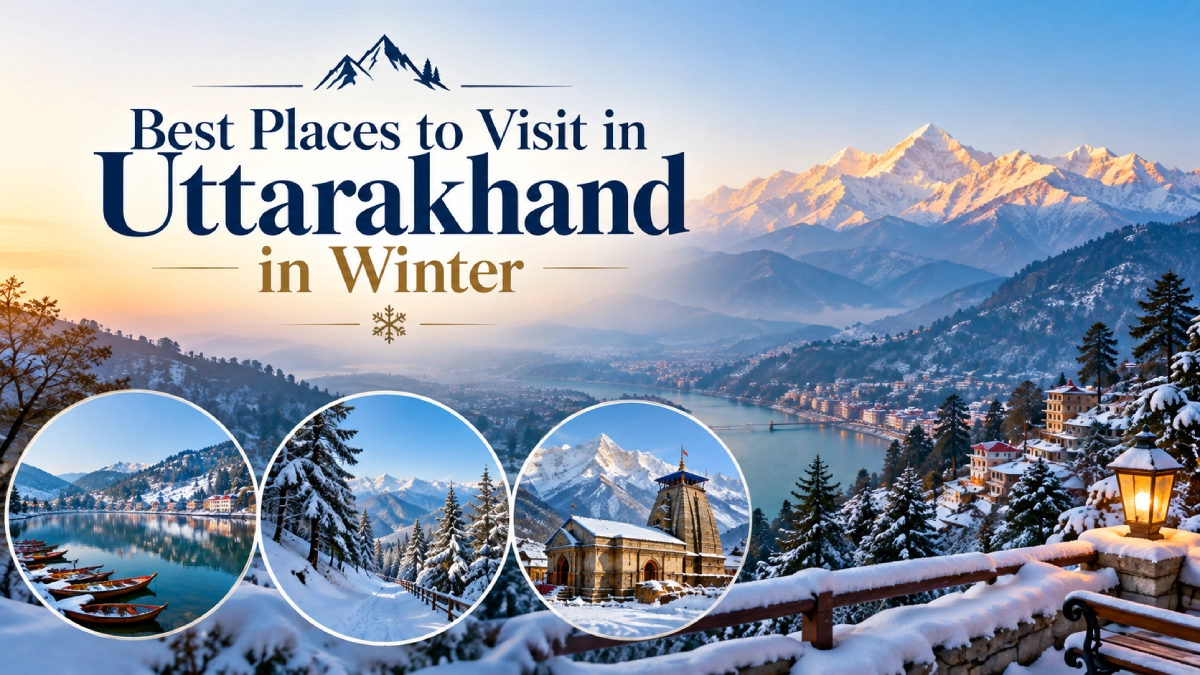
Winter changes Uttarakhand completely. The crowds that fill Mussoorie’s Mall Road in May thin out, the air turns sharp and clear, and the higher reaches get a dusting of snow that transforms otherwise familiar hill stations into something closer to a postcard. If you’ve been putting off a trip to Uttarakhand in Winter because summer felt too crowded and monsoon too risky on the roads, winter is worth a serious look. Here’s a rundown of where to go, what to expect, and how to plan around the season’s particular quirks.
Why Winter Works for This State?
Uttarakhand’s winter runs roughly from November through February, and while temperatures do drop, most of the state remains accessible and genuinely pleasant during the day. Nights get cold, sometimes bitterly so at higher altitudes, but that’s exactly what draws people north in the first place. Snowfall generally starts in December and continues through February in the higher hill stations, and this is peak season for anyone specifically chasing snow without travelling all the way to Kashmir or Ladakh, where winter access gets far more complicated.
The other advantage is simply fewer people. Uttarakhand’s Char Dham Circuit and its major hill stations get overwhelmed with tourists during the May-June rush, and winter, aside from the Christmas and New Year window, offers a much calmer version of the same destinations.
Mussoorie: The Reliable Favourite Destination of Uttarakhand in Winter
Mussoorie remains the most popular winter pick from Delhi, and for good reason. It’s close enough for a weekend trip, roughly 280 km and 6-7 hours by road, and it reliably gets light to moderate snowfall through January. Gun Hill and Kempty Falls take on a different character under snow, and Mall Road, minus the peak-season crowds, becomes genuinely walkable. December sees a spike in visitors around Christmas and New Year, so if you want a quieter version of Mussoorie, early January through February tends to be calmer while still offering good odds of snow. You can also arrange your trip with some other places nearby. Read this to explore Complete Itinerary of Jim Corbett, Nainital, Rishikesh and Mussoorie.
Auli: For Travellers Who Want Real Snow Sports
If Mussoorie’s snow feels more atmospheric than substantial, Auli delivers the real thing. This is Uttarakhand’s primary skiing destination, with a cable car ride up from Joshimath that’s worth doing purely for the views, snow aside. Auli sees heavy, reliable snowfall from December through February, and it’s set up for actual skiing and snowboarding rather than just snowball fights on a hillside. It’s a longer drive from Delhi, close to 500 km and a full day’s travel, so this works better as part of a longer Uttarakhand circuit rather than a quick weekend trip. Combining Auli with a stop in Rishikesh or Devprayag on the way up or back makes the long drive feel more worthwhile.
Nainital: Winter Without the Lake Rush
Nainital in winter loses its summer crush of boating tourists but keeps its charm. The lake itself is calmer, the surrounding hills get occasional snow, and the Mall Road and Naina Devi Temple area feel far less frantic than during peak vacation months. Nainital doesn’t get snow as reliably as Auli or Mussoorie, but on the years it does, the lake framed by snow-dusted hills is one of the more striking winter scenes in the state. This is a good pick for families who want a hill station experience without committing to the longer, more demanding drive toward Auli.
Chopta and Tungnath: For a Quieter, More Rugged Winter
Chopta has earned a reputation as “mini Switzerland” for good reason, and in winter it genuinely earns the comparison. The trek up to Tungnath and Chandrashila becomes more demanding under snow, but the views from the top, particularly at sunrise, are worth the effort for travellers who don’t mind some physical exertion. This is a better fit for smaller groups or serious trekkers rather than families with young children or elderly members, since accommodation options are more basic and the trek itself needs proper winter gear.
Dehradun and Rishikesh: The Practical Base
Dehradun and Rishikesh are two places of Uttarakhand in winter where, there is no snow, sitting lower in the valley, but they make sense as a base for winter trips into the higher hills, and both are worth a day or two on their own. Rishikesh in winter is noticeably calmer than its usual river-rafting-season crowds, and the ghats along the Ganga at dawn in the cold, quiet months have a stillness that’s harder to find during peak season. Many travellers use Dehradun or Rishikesh as the first overnight stop before continuing on to Mussoorie, Auli, or further into the hills, which breaks up a long drive from Delhi sensibly.
Kausani and Ranikhet: The Underrated Picks
Kausani rarely makes the top of anyone’s Uttarakhand list, but it probably should, especially in winter. Sitting at a higher altitude than Nainital, it offers uninterrupted views of the Nanda Devi and Trishul peaks on clear days, and the town itself stays refreshingly free of the crowds that gather around the more famous hill stations.
Ranikhet, a short distance away, has a similar quiet, cantonment-town character with pine forests and golf greens dusted in frost through January. Neither destination gets the heavy snowfall Auli sees, but both offer a calmer, less commercial version of a Himalayan winter, and they pair well together if you’re already planning a Nainital-area circuit and want to add a day or two somewhere less crowded.
What About Char Dham in Winter
The main Char Dham temples, Kedarnath, Badrinath, Gangotri, and Yamunotri, close for winter entirely, between late October and November depending on the specific shrine, and reopen only around April or May once the snow clears. This catches some travellers off guard when planning a winter Uttarakhand trip, so it’s worth building your itinerary around the lower and mid-altitude destinations covered above rather than assuming the pilgrimage circuit is accessible year-round. If a Char Dham trip is part of your plans, that’s better suited to a separate visit during the late spring or early summer window when the shrines are actually open.
Suggested Read: Offbeat Places in Uttarakhand to Must Explore
Planning the Route and Choosing the Right Vehicle
Winter driving in Uttarakhand needs a bit more planning than a summer trip. Roads toward Auli and Chopta can see temporary closures after heavy snowfall, so building flexibility into your itinerary matters more than usual. Fog is common on the plains stretch between Delhi and Dehradun Route during December and January mornings, so an early departure sometimes backfires, and a slightly later start with a driver comfortable navigating low-visibility conditions is often the safer call.
For families or groups planning this trip together, a vehicle suited to hill roads matters as much here as it does on any Himachal route. Smaller groups of 8-10 travellers often find a 9 seater tempo traveller comfortable enough for the winding roads toward Mussoorie or Nainital, while larger family groups or friend circles doing a longer circuit through multiple hill stations tend to prefer a 16 seater tempo traveller, which keeps everyone together across a multi-day itinerary rather than coordinating two separate vehicles through unfamiliar mountain roads.
Cold weather also raises the stakes on vehicle comfort. Proper heating, sealed windows, and a driver who checks tyre condition before a hill ascent all matter more in winter than they would on a plains-only trip. If you are deciding between a standard vehicle and something with more premium seating for a longer, colder itinerary, it’s worth understanding the difference a Maharaja Tempo Traveller makes on longer hill circuits, particularly for elderly travellers who feel the cold and the winding roads more than younger passengers do.
What to Pack and What to Expect
Layering matters more than any single heavy jacket, since daytime temperatures in places like Rishikesh or Dehradun can feel mild while nights in Auli or Chopta drop well below freezing. Carry proper waterproof footwear if snow is likely, since regular sneakers soak through fast and make walking around snow-covered viewpoints miserable. Keep a basic medical kit handy, particularly if your group includes anyone sensitive to altitude, since even moderate elevations can cause mild discomfort for people unused to hill travel. Check road conditions close to your departure date rather than relying on general seasonal expectations, since a single heavy snowfall can close routes toward Auli or Chopta for a day or two at a time.
Sequencing a Winter Circuit
A well-paced Uttarakhand winter trip works better, more often than not, as a loop rather than an out-and-back to a single hill station. A common sequence runs Delhi to Dehradun or Rishikesh for the first night, continuing on to Mussoorie for a couple of nights, then either looping back or pushing further toward Nainital if time allows.
Groups chasing serious snow and willing to commit to a longer drive often build a dedicated trip around Auli instead, treating Joshimath and the surrounding valley as the main focus rather than trying to combine it with the Mussoorie-Nainital circuit in a single trip. Trying to cram all of these destinations into one short holiday often backfires, since winter driving conditions demand more buffer time than the same routes would need in fair weather.
Final Thoughts
Uttarakhand in winter rewards travellers willing to trade a bit of summer convenience for genuinely different scenery and far fewer crowds. Whether you’re chasing real snow sports in Auli, a quieter version of Mussoorie’s usual bustle, or a rugged trek up to Tungnath, the state offers enough variety that a winter trip rarely feels like a compromise against the more popular summer season. Plan around realistic road conditions, choose a vehicle built for hill driving and cold weather, and give yourself enough days to actually enjoy the stillness that makes this season worth the trip in the first place.
Frequently Asked Questions
Which places should I visit in Uttarakhand in winter?
Mussoorie, Auli, Nainital, Chopta, Kausani, and Ranikhet are the strongest winter picks, each offering a different mix of snow, views, and pace depending on how much activity or solitude you’re looking for.
Does it snow in Uttarakhand in December and January?
Yes, snowfall is common at higher altitudes like Auli, Chopta, and parts of Mussoorie from December through February. Lower areas like Dehradun and Rishikesh stay cold but don’t see snow.
Is Auli good to visit in winter?
Auli is the state’s best destination for reliable, heavy snowfall and actual skiing and snowboarding, making it the top choice for anyone specifically chasing snow sports rather than just scenic snow views.
Is Char Dham open in winter?
No, Kedarnath, Badrinath, Gangotri, and Yamunotri all close for winter, generally between late October and November, and reopen around April or May. Winter Uttarakhand trips need to be planned around the lower and mid-altitude destinations instead.
What is the best hill station in Uttarakhand for snow?
Auli offers the most reliable and heaviest snowfall for dedicated snow activities, while Mussoorie is the more accessible option for a shorter trip from Delhi with a good chance of snow through January.
Is Mussoorie good to visit in winter?
Yes, Mussoorie is one of the most reliable winter destinations close to Delhi, with light to moderate snowfall common through January and noticeably smaller crowds outside the Christmas and New Year period.
Is Nainital worth visiting in winter if it doesn’t always snow?
Yes, even without guaranteed snowfall, Nainital in winter offers a calmer lake, fewer tourists, and pleasant daytime weather, making it a solid choice for families who want a relaxed hill station trip rather than a snow-specific one.
What should I pack for an Uttarakhand winter trip?
Layered clothing, a proper warm jacket, waterproof footwear if snow is likely, and gloves and a cap for higher-altitude stops like Auli or Chopta. Nights get significantly colder than daytime temperatures suggest, even in lower towns like Rishikesh.
